When the two men walked over holding their beers, Stella Maris Buthe didn’t think much of them. As the only daughter in a family with five boys, she knew something about men and boys. The one in the leather bomber jacket was full of himself. Her body language and expression communicated her lack of interest, but he was not deterred. When he asked if there was room in the booth to sit next to her, she shifted slightly, and he settled in. His friend slid in next to her roommate Patricia.[1]
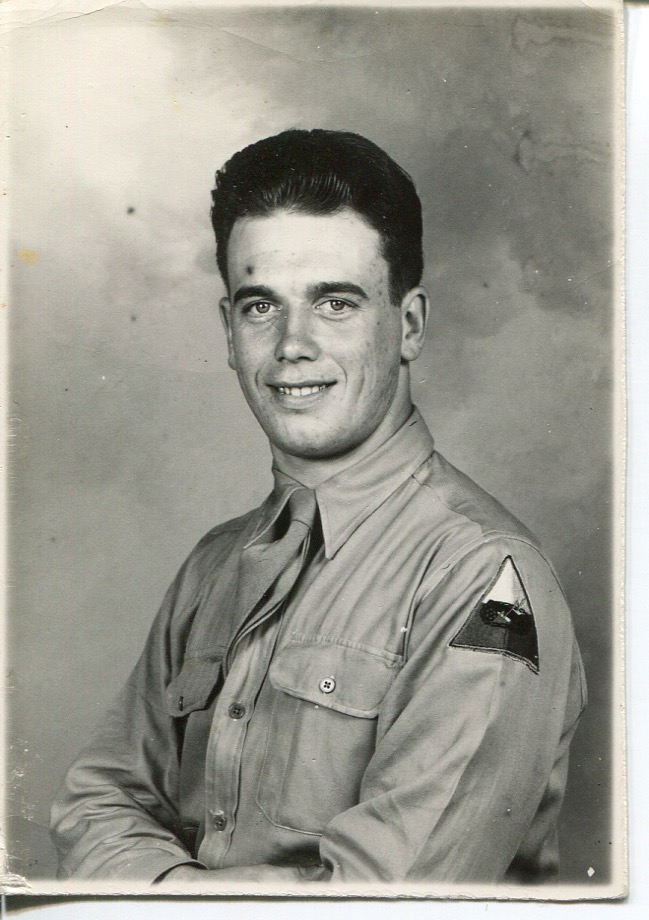
Stella thought the one who sat beside her was not bad looking. He introduced himself as Leonard. With brown hair and deep, recessed blue eyes, his Swedish heritage was evident in the strong features in his face. Although he was not a tall man, he was still a head taller than she was. He was fit and very social.
Over the big band music and the sounds of the other patrons in the Marine Club, Stella listened to him talk and tried to put the pieces together. Like many of the other men in the bar, he was a veteran. He enlisted late in the war. As a buck private, he was on a troop transport in the middle of the Pacific Ocean headed for the invasion of Japan when the United States dropped the atom bomb in August 1945. The war ended weeks later, so he never dodged a bullet. After spending a few months in Okinawa, he returned stateside and was discharged near the end of 1946.
As Stella knew, the government of the United States was grateful to every man who served. It didn’t matter whether you fought in the trenches, navigated a bomber over Berlin, manned a turret on a battleship, or changed bed pans in an Army hospital in Maryland, when you got your discharge papers you were eligible for the GI Bill. Returning home, Leonard enrolled at South Dakota State in the College of Engineering and was just finishing his junior year.
Like Stella, Leonard had grown up on a farm, and his family had struggled during the Depression. Where her family had always been poor, however, his had been prosperous with a large, Sears and Roebuck catalog home and plenty of land for crops and livestock. But in the Depression, they lost everything. Moving closer to the city of Sioux Falls, his parents rented a smaller farm, and Leonard enrolled at Cathedral High School.
Leonard had dreamed of becoming an engineer since he was a child, but even with the help of the federal government, he still had to work to make ends meet. During his three years in college, he had been a garage mechanic, cleaned up in a barber shop, and worked as a cashier in a small store that sold tobacco, ice cream, candy and beer. Stella got only a few of these details that night, but she sensed that he was ambitious and not easily deterred once his mind was made up.
For his part, Leonard Swanson was already smitten. At the age of 23, Stella had a full, round face with prominent cheeks and wide-open eyes. Her brown hair was parted in the center and cut to her neckline.[2] She had grown up in the farming community of Carthage, South Dakota, about 90 miles west and north of Sioux Falls. Her German-born father was 17 years older than her mother and worked as a farm laborer. [3] Stella graduated in 1945 with a handful of classmates from Argonne High School, where she was voted “School Queen.” At the suggestion of her school counselor, she joined the US Cadet Nurse Corps. But with the end of the war, the nursing corps was shrinking.[4] She moved to Sioux Falls and in 1947 found a job with the Northwestern Bell Telephone Company as a long distance operator.[5]
The phone company was growing. Long distance call volumes from Sioux Falls had nearly tripled since the start of the war, and the company was hiring dozens of young farm women to pull and plug cables on its switchboards. In fact, the company was in the middle of installing a new 100-foot switchboard with positions for 44 operators working side-by-side in a long row.[6] During the busiest times, the women hardly had time to talk to each other, but Stella and Patricia had become good friends. They shared an apartment on West 12th Street, three blocks away from her older brother and sister-in-law who worked for the Morrel’s meatpacking company.[7] And when they had time off together, they went out on the town.
Leonard asked if Stella wanted to dance. Half-heartedly she agreed. When it was time to go, he asked if he could see her again. She hesitated, but gave him her phone number. As he and his friend Tommy Thomsen headed home that night, Swanson knew he was in trouble. He had made a date to see her next week, but he was also committed to working a construction job in Aberdeen for the summer. By the time he returned to school and could see Stella again, the flicker of interest he had seen in her eyes might be gone.
[1] Leonard Swanson, “Stella Maris,” poem, nd.
[2] See wedding photo, Sioux Falls Argus Leader, April 1, 1951, 21.
[3] Record of Marriage, Mitchell, SD, October 8, 1923. Ancestry.com. Mary Harings was 17 years younger than Henry.
[4] US Cadet Nurse Corps Membership Card, 1945, Ancestry.com.
[5] “Stella M. Buthe, Leonard Swanson Exchange Nuptials,” Sioux Falls Argus-Leader, March 28, 1951, 16.
[6] “Long Distance Switchbboard in S.F. Replaced,” Sioux Falls Argus-Leader, May 31, 1950, 11.
[7] Sioux Falls City Directory, 1951, 78. [Stella lived at 115 W. 12th. Clemence (her older brother born 7.16.1924) and Edna Buthe, who both worked for Morrell’s meatpacking company, lived three blocks away at 410 W. 12th]. See also Sioux Falls City Directory, 1948, 75. Stella’s father was Henry Buthe.
 Like a Train in the Night