January 1972 – Before He Was a Hero

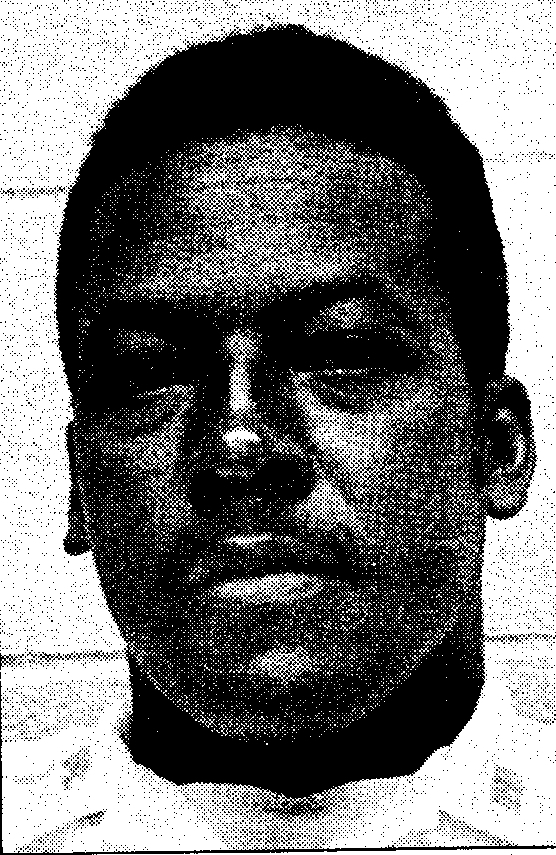
Sam Roach was credited with saving 41 lives during the flood. (Rapid City Journal)

Staff Sergeant Sam Roach was more than frustrated with the elected town council of Box Elder. All he wanted was a license to sell beer, and the council refused to give it to him. With his close-cropped black hair, a thin moustache over his lip, his penetrating brown eyes, and most of all his dark skin, the muscular 37-year old Air Force veteran was sure it was because he was Black.

With nearly two decades of service in the Air Force, including wartime tours in Korea and Vietnam, Roach was one of nearly 700 African-American airmen stationed at Ellsworth Air Force Base in 1971. Many of his fellow airmen lived minutes away from the base in trailer courts and poorly built homes in Box Elder, a community of roughly 600 people living just east of Rapid City. Most of these men and their families had experienced racial prejudice since arriving at Ellsworth. If they went out to eat in some coffee shops or drink in various bars in town, they had food or drinks dumped on them by waiters or waitresses sending a message that they weren’t welcome. Plenty of landlords in Rapid City wouldn’t rent to them. To find off-base housing, they placed classified ads—“Negro airman desires 1 bedroom furnished apartment”—hoping to find one of the handful of landlords willing to take Black tenants. Many local employers—including Kmart, Woolworth’s, Gibson’s and Gambles—routinely hired the wives of White servicemen but refused to employ the wives of Black servicemen. According to Roach, most Black servicemen would rather be based in Alabama or Mississippi, than Rapid City.[1]

Over nearly three decades, African American service members stationed at Ellsworth had pushed back against this racism. The first contingent of Black servicemen arrived in the middle of World War II, shortly after the based was opened. They were part of an all-Black truck company associated with Quartermaster Corps of the US Army and commanded by three African-American officers. As reported in the nation’s largest African-American newspaper, they were the first Black soldiers to be trained “in this part of the country.”[2] Anticipating their arrival in April 1943, the Rapid City Journal ran an article touting the contributions that Black soldiers were making to the war effort.[3] Shortly thereafter, the paper noted the arrival of the “colored” Quartermaster Corps troops at the base and quoted their Black commanding officer saying the men were “right at home” in Rapid City.[4] But not all White Rapid Citians welcomed these soldiers.

Through the 1950s, successive generations of enlisted Black airmen and officers experienced discrimination when they looked for housing off base or sought services. To ameliorate the situation in 1951, the base commander and Sergeant Wendell LaFleur spoke to service clubs in town. LaFleur asked Rapid City’s White businessmen to “Look first and see a man. Then decide whether he is the type of man you’d care to associate with. Judge him as an individual, not by his color.”[5] Despite LaFleur’s appeal, business owners, landlords, and government officials continued to discriminate.

“Look first and see a man. Then decide whether he is the type of man you’d care to associate with. Judge him as an individual, not by his color.”

Sergeant Wendell LaFleur

By 1957, there were 396 Black airmen stationed at the base; 127 were married and had their families with them. Forty-six of these Black families were living off base in cabin camps in Rapid City.[6] As these airmen attended to their duties knowing that at any moment a Soviet attack could spark a nuclear war, they faced myriad challenges because of their race. One seemed simple. They lacked a decent place to go to relax and unwind.

In the mid-1950s, only two bars in Rapid City welcomed Black patrons: the Coney Island at 216 Second Street and the Plantation, located outside the city limits to the east. “Bobby” Seale, an airman who would later co-found the Black Panther Party, was stationed at Ellsworth in the 1950s. He remembered that when they had time off, “White GIs went to the white places in town. The black GIs went to the two black places.”[7] In 1957, both bars catering to Black patrons were temporarily unavailable: Coney Island because of a fire, the Plantation because it was placed off-limits by the Air Force because it lacked decent sanitary facilities. Frustrated by the situation and emboldened by increasing attention to civil rights issues nationally, Black airmen began pressing harder against discrimination.

Only three years after the US Supreme Court’s Brown v. Board of Education, which declared segregation inherently unequal under the Constitution, and several years before lunch counter sit-ins in the American South would make headlines, a dozen Black airmen entered a downtown bar in Rapid City. When management refused to serve them, they spread out through the establishment occupying nearly a dozen booths. The men were “well-behaved,” according to a local attorney, and “while the management wouldn’t serve them, it knew it couldn’t evict them.” [8]

Black airmen also pushed for the right to open a private club that would cater to their tastes in food and music and leave them free to relax without having to worry about being taunted or abused by racist patrons or owners. Supporters of this concept enlisted Attorney Lynden Levitt who petitioned Mayor Fred Dusek and the Rapid City Common Council for a permit on behalf of the Black community. The proponents suggested various possible locations, including the old police station on Main Street.[9] The Rapid City Liquor Dealer’s Association endorsed the idea. [10] In the wake of the much publicized bus boycott in Montgomery, Alabama and the integration of schools in Little Rock, Arkansas, some members of the Mayor’s recently established Committee on Human Relations resisted the establishment of Black-only club as a blatant concession to the forces of segregation.[11] But the committee did not represent the views of businessmen downtown.

In 1958, businessman John A. Oulman proposed to operate the new establishment, and he asked the Common Council to let him buy and move the Coney Island’s beer license. Eighteen downtown businesses signed a letter asking the common council to reject the application. [12] Faced with this pressure and despite the city’s repeated assurances to the Air Force that it would “do something about the problem of finding a ‘decent’ place for the Negro population from Ellsworth,” the council voted 9 to 1 to reject the license transfer, effectively killing the concept of a club for African Americans in Rapid City.[13] Meanwhile, the Coney Island continued to serve Black and Native American customers. In January 1959, some White residents of Rapid City tried to make it clear that they weren’t welcome by torching a seven-foot wooden cross wrapped in burlap and soaked in kerosene in the alley behind the establishment.[14]

Throughout the 1960s, Black airmen and their families continued to press for their civil rights in Rapid City, fighting for fair housing laws and an end to discrimination in restaurants and other public establishments. An informal survey conducted by the newspaper in 1961 found “a high degree of tolerance” for integration, but also evidence of substantial and persistent prejudice.[15] The Black Hills Civil Rights Committee, however, surveyed businesses in Rapid City and found that 90 percent of the city’s bars and barber shops still refused to serve Black customers, along with 30 percent of the restaurants and motels. “The problem is acute … in this city in the shadow of the ‘Shrine of Democracy,” reported the New York Times.[16]

For many Black airman, the lack of a safe place to go to relax continued to be a problem. In 1961, the city barred the Coney Island from selling alcohol. In response, the owners, George and Adella Hudson, opened George’s Jazz Cellar in the basement, but the city quickly shut it down.[17] Asserting that they were being unfairly targeted by the city because they were Black and catered to a Black clientele, the Hudson’s hired attorney Ramon Roubideaux to defend them. In court, Roubideaux’s entire defense focused on the city’s failure to provide public accommodations to Black airmen and their families. He reiterated the point, “All these people want is the right to be left alone and they’re entitled to that.”[18]

Meanwhile, Hudson made plans to open a restaurant on property the Hudson’s owned at the corner of Maple and Madison Streets in North Rapid City.[19] Segregationists asked the council to stop the project. Some ignited a ten-foot flaming cross on the property. Hudson chased them away by firing a shotgun into the air.[20] The city’s mayor personally offered a reward for information that would lead to the arrest of the perpetrators. “It is time the responsible element in this city got on the ball and end the acts inspired by irresponsible radicals,” the mayor said.[21]

Worried that cross-burnings and other flagrant acts of racism would tarnish the city’s image, the mayor pushed local businessmen to support the opening of Hudson’s restaurant. After Hudson’s place opened, one segregationist pointed to the establishment as proof that the Common Council and business leaders had the best interests of Black airmen in mind. “Now they’ve got a beautiful place of their own where they can go,” explained one White restaurant owner. “We felt that we wanted to give them something. This town has bent over more than backward for them. The only thing we’re scared of is the young ones coming in and trying to intermingle.”[22] The stress of fighting the city’s segregationists, however, proved too much for Hudson. In January, 1963, the 39-year old Paris, Texas native died.[23]

With Hudson’s death, Black airmen’s hopes of having a place of their own were once again put on hold. Meanwhile, the South Dakota Advisory Committee of the United States Commission on Civil Rights launched an investigation into race relations in Rapid City in the early 1960s.[24] Shortly after the Commission completed its work, the South Dakota Legislature passed a law prohibiting racial discrimination in public accommodations, but discrimination in Rapid City continued.[25] In 1969, the Rapid City Journal ran a series of stories profiling the “City’s Black Man Alone, Unhappy.” Despite significant advances in civil rights around the country and the rise of the Black Power movement, airmen continued to face prejudice even though the South Dakota Governor Frank Farrar insisted, “there’s no discrimination in South Dakota.”[26]

Sam Roach knew the governor’s statement was a lie. When the city of Box Elder refused to grant him a license to sell 3.2 percent beer, he recruited a White friend to submit an application instead, but when local officials discovered the subterfuge, Roach’s friend caught “holy hell from the town council.”[27] Frustrated by what he thought were obvious acts of discrimination, Roach called on his fellow African-American airmen to protest.

In a letter to the editor of the Rapid City Journal in March 1971, headlined “Black man’s complaint,” he noted that there were approximately 700 Black servicemen stationed at Ellsworth, but Rapid City and the nearby community of Box Elder had “refused to accept the black man into the community.” Most landlords refused to rent to African Americans. Those that did, leveled a surcharge. When Black entrepreneurs sought to open their own establishments, White city officials refused to issue them a license to sell alcohol. Roach urged his fellow Black airmen to write to their congressmen and to the President and “that the USAF either refrain from shipping blacks to Ellsworth, close the base, or place the town off limits to all military personnel.”[28]

Roach may have been emboldened to launch his protest because he knew he was leaving the Air Force. Unable to start a bar in Box Elder, he joined the Rapid City Police Department as a patrolman instead. But Roach did not give up on his dream of opening a bar or nightclub where Black servicemen could relax without fear of racism. In the summer of 1971, he began talking to Mary Long, who owned and managed the Stirrup Lounge & Café at 728 Main Street.[29]

The Stirrup was located among a series of bars in downtown Rapid City. The district was a constant source of trouble for the Rapid City Police Department and a headache for local officials who received frequent complaints from citizens, including former Mayor Fred Dusek. Some members of the council along with leaders at the Rapid City Chamber of Commerce were pushing the city to secure federal urban renewal funds to tear down the entire block. Earlier in the year, the city had suspended the Stirrup’s license to sell beer and wine because of several liquor violations and issues with disturbing the peace. Long pleaded with the council, noting that her husband was sick, and promising that she would either run the place herself or find a good manager. Instead, she decided to sell the place to Roach.[30]

When he took over the Stirrup that fall, Roach faced a number of challenges, including various code violations that had to be fixed. Sam pressed the landlord to make these improvements. When the landlord failed to act, Sam withheld rent payments and paid for some of the work himself. In January, a customer pulled a gun and Sam threw him through a glass window.[31]

Despite all of these difficulties, Roach was able to transform the Stirrup into Sam’s Ebony Club, featuring “Soul Music — Soul Food” and “Go-Go Girls.”[32] The Club catered to the late night crowd. Entertainers started their sets at 10:00 pm and played until 2:00 in the morning with the smells of cigarette smoke, grease and beer permeating the air.[33] After closing and cleaning up, Sam went upstairs to sleep in his apartment as Rapid City stirred to life and the sun began to rise in the east.[34]

Trouble started almost as soon as the Ebony Club opened. After midnight on Friday, January 21, Roach was trying to eject a 16-year old youth who had come into the bar. A number of customers began arguing with him. One was a 24-year old airman who opened his coat to reveal an automatic pistol in a shoulder holster. Fearing for his safety, Roach pulled out his own .22 caliber revolver and fired, injuring the airman.

As the struggle continued, the 16-year old grabbed the airman’s gun and bolted out the door with Roach in pursuit. Out on the sidewalk, the youth turned and fired at Roach, but missed. Meanwhile, an angry crowd grabbed Roach and pinned him to the ground.

After the police calmed everyone down, the airman was taken away in an ambulance while officers searched for the youth. Half an hour later, the bar was on fire. Fire department officials discovered that gasoline and other inflammables had been poured on the back door to the alley and ignited. The Fire Department responded and extinguished the blaze, but not before it caused hundreds of dollars of damage and someone lifted approximately $185 from the cash register.[35]

Despite the “ruckus,” reported by the paper, Roach was back in business the next week, but once again the Ebony Club ran into trouble with law enforcement. Long after midnight on January 29, the police responded to three disturbance calls and ultimately closed the bar and arrested two women. As the Ebony Club’s uneasy relationship with the police department and city officials continued over the next month, the realtor who owned the property decided to evict Sam and his business at the end of February.

Sam’s 20-year old White girl friend was incensed. Donna Ethel Frenzen had grown up in Rapid City and attended Central High School. Married and divorced already, she was dating Sam in the fall of 1971 when he was planning to take over the Stirrup and was shocked by the treatment she received when she began appearing with a Black man in public. There were anonymous obscene phone calls. Her employer fired her after 14 months. Her landlord evicted her because they didn’t want a Black man in the house. In protest, Donna wrote a letter to the editor to ask why federal laws barring discrimination weren’t being enforced.[36]

Donna continued to be an advocate after the Ebony Club was evicted from the location on Main Street. In another letter to the editor titled “Our one black bar,” she chastised Rapid City’s “so-called American businessmen” for targeting a Black business owner. If fights were the issue, she said, “every bar on Main Street should be closed.”[37]

Meanwhile, Sam began looking for a new location for the Ebony Club. He rented space on East North Street and petitioned the city to let him move the club’s beer license. Then he discovered that the adjacent business owners bought the property so that they could prevent him from moving in.[38]

Donna was not about to let city bureaucrats hide what she saw as blatant discrimination. She began organizing a protest march and hoped to enlist the hundreds of Black airmen at the base. On April 4, she appeared before Mayor Don Barnett and the common council to call them out for being unfair, to chastise business leaders for discriminating, and then castigate the entire community for prejudice against Blacks and unwillingness to provide African Americans with “a place of their own.” She accused the Air Force of assigning Black men to Ellsworth “against their will and without their consent.” To put pressure on the city, she said she had written “to high officials from the President on down and asked the Air Force to declare the city off limits to airmen.”[39]

Mayor Barnett rejected Donna’s criticisms of the council and the community. He also made it clear that if she submitted the proper application for a parade, he would make sure that it was processed. [40] Three days later, Donna was able to organize 75 men and women to walk down Sixth Street carrying signs protesting the closure of the Ebony and insisting “We Want Our Own Bar Now.” But the Ebony did not reopen.

Whether Sam Roach was in the room on the night that Donna blasted the common council is not clear, but it seems likely that he had already given up on the Ebony Club and knew he needed to go back to work. That night, as the Common Council continued on their agenda, they approved a plan to hire three new patrolmen for the Rapid City Police Department. One of them was Sam Roach.


[1] “Black man’s complaint,” Rapid City Journal, March 3, 1971, 5.

[2] “Truck Company Officers in S. Dakota First Time,” New York Amsterdam News, May 29, 1943, 11.

[3] “American Negro Now Doing a Major Part,” Rapid City Journal, April 6, 1943, 4.

[4] “First Colored Troops Arrive at Local Base,” Rapid City Journal, April 13, 1943, 4. See also, “Negro Sergeant Was In World War One,” Rapid City Journal, April 20, 1943, 7.

[5] “Mutual Problems of City and Air Base Reviewed,” Rapid City Journal, December 17, 1951, 3.

[6] These figures were offered by Attorney Lynden Levitt in a hearing before the Rapid City Common Council. “Council Delays Action on Beer License Move,” Rapid City Journal, February 18, 1958, 3.

[7] Stephen Shames and Bobby Seale, Power to the People: The World of the Black Panthers (New York, Abrams Books, 2016).

[8] Ken Jumper, “Club License Sought to Care for Negroes,” Rapid City Journal, March 19, 1957, 2.

[9] Ken Jumper, “Club License Sought to Care for Negroes,” Rapid City Journal, March 19, 1957, 2.

[10] Ken Jumper, “Club License Sought to Care for Negroes,” Rapid City Journal, March 19, 1957, 2.

[11] “Mayor’s Committee Talks Indian Housing and Negro Segregation,” Rapid City Journal, March 23, 1957, 13.

[12] Ken Jumper, “Club License Sought to Care for Negroes,” Rapid City Journal, March 19, 1957, 2. See also, “Suggestions Heard, No Action On Main Street Beer Bar License Request,” Rapid City Journal, February 25, 1958, 3.

[13] “Transfer of License is Rejected,” Rapid City Journal, March 4, 1958, 3.

[14] “Klan Theory Discounted in Cross Burning,” Rapid City Journal, January 30, 1959, 1.

[15] Pat McCarty, “High Degree of Tolerance Found Toward Negroes,” Rapid City Journal, February 5, 1961, 3.

[16] Donald Janson, “South Dakota Northern Pocket of Discrimination,” New York Times, October 22, 1962, 18

[17] “Jazz Cellar Case Begins Wednesday,” Rapid City Journal, June 21, 1961, 3.

[18] “Restraining Order Issued on Coney Island Property,” Rapid City Journal, March 8, 1962, 3.

[19] “Restaurant, Parking Meter Issues Come to Council,” Rapid City Journal, August 8, 1961, 3.

[20] “Police probe cross burning Friday night,” Rapid City Journal, August 12, 1961, 3.

[21] “100 Reward Offered For Arrest of Cross Burners,” Rapid City Journal, August 13, 1961, 3.

[22] Donald Janson, “South Dakota Northern Pocket of Discrimination,” New York Times, October 22, 1962, 18

[23] “George Hudson Dies Saturday in Hospital,” Rapid City Journal, January 12, 1963, 3.

[24] South Dakota Advisory Committee to the United States Commission on Civil Rights “Report on Rapid City” (March 1963): 45–47.

[25] Vanepps-Taylor, Forgotten Lives, 186–188. Joseph T. Boone, “For Fair Housing,” Rapid City Journal, February 22, 1967. Ed Martley, “Hearing Continued on Public Accommodations Law Complaint,” Rapid City Journal, October 26, 1968.

[26] Bill Wagner, “City’s Black Man Alone, Unhappy,” Rapid City Journal, November 2, 1969, 1.

[27] “Black man’s complaint,” Rapid City Journal, March 3, 1971, 5. See also, Box Elder Board of Trustees, Minutes, November 10, 1970, Rapid City Journal, December 1, 1970, 17.

[28] “Black man’s complaint,” Rapid City Journal, March 3, 1971, 5.

[29] Display ad, Rapid City Journal, November 25, 1970, 11. The City Council considered the transfer of beer licenses from Lawrence Wardrope to Mary J. Long for this establishment on February 11, 1971. Bob Fell, “Committee questions rural fire costs, transfers of two city beer licenses,” Rapid City Journal, February 11, 1971, 3. This transfer approval was delayed over subsequent meetings pending information from the Sheriff’s Department. Apparently Long’s husband Frank had operated the Old Town south of the city. Also, Long planned to hire James L. Bush as manager, but Bush had been convicted of several liquor violations.

[30] Rapid City Common Council, “Official Proceedings,” August 2, 1971, in Rapid City Journal, August 7, 1971, 10.

[31] “Council asked to approve black parade on Friday,” Rapid City Journal, April 4, 1972, 4.

[32] “Grand Opening” advertisement, Rapid City Journal, January 5, 1972, 8, and “Ebony Club” advertisement, Rapid City Journal, January 15, 1972, 4.

[33] “Grand Opening,” Rapid City Journal, January 5, 1972, 8.

[34] “Shooting, arson theft involved in bar ruckus,” Rapid City Journal, January 21, 1972, 3.

[35] “Shooting, arson theft involved in bar ruckus,” Rapid City Journal, January 21, 1972, 3.

[36] Donna E. Simpson, “Discrimination,” Rapid City Journal, November 3, 1971, 11.

[37] Donna E. Simpson, “Our one black bar,” Rapid City Journal, March 21, 1972, 5.

[38] “Panel to study 40 applications for liquor permit,” Rapid City Journal, March 29, 1972, 2.

[39] “Council asked to approve black parade on Friday,” Rapid City Journal, April 4, 1972, 3.

[40] “Council asked to approve black parade on Friday,” Rapid City Journal, April 4, 1972, 3.

December 1925 – Fred & Viola Dusek

Rapid City Mayor Fred Dusek and wife Viola. (Courtesy Dusek Family Archives.)

Long before the government betrayed him, Fred Dusek believed in the essential fairness of American democracy. A child of the new century, he was born in a sod house in Nebraska on May 31, 1900, the first of his parents’ eight children.[1] His father James had come to the United States from Bohemia in 1889 at the age of 14.[2] After two years in Iowa where he worked, learned English, and saved money to help his siblings immigrate to the United States, James moved west to Nebraska and homesteaded at a place called Sweetwater halfway between the village of Pleasanton and the small railroad town of Ravenna.[3] There he met his future wife, Barbara Maulis, another Bohemian who had immigrated with her parents at the age of 19 and arrived in Ravenna in 1891.[4] After Barbara left the community to live with a cousin in Omaha and work as a housemaid in a private home, James could not forget her. In 1899, James traveled to Omaha, proposed, and they were married.

Years after he had moved to Rapid City, Fred Dusek would long for the sense of family and community he had experienced in Buffalo County where Bohemian and German immigrants greeted one another in their native languages, and on Saturdays farm families gathered in town to shop and to socialize.[5] Throughout the growing season, farmers helped one another plant and then harvest their crops.[6] Fred would later conclude that the agrarian life promoted a sense of community and cooperation. In contrast, in the city “everyone is for himself.”[7]

Likewise Fred remembered the landscape of his youth where his father had worked to not only turn a profit, but also transform his land into a place of beauty, smoothing uneven and broken banks into gentle slopes and planting fruit trees and ornamental shrubs.[8] By the time Fred was in his mid-20s, his father had built a fine home with a well and a hand pump that brought water into the kitchen. By then, he owned three farms that included eight thousand acres.[9]

James and Barbara Dusek ran the farm like a factory. The mid-day meal was always served at noon, supper was at six. The whole family worked long hours. As the oldest son, Fred carried the most responsibility. One of his many jobs was to carry water to the young trees that his father had planted to block the wind that raked across the Great Plains.[10]

Before they were teenagers, the children walked to the country school two miles from the homestead, which they attended until the eighth grade. After that, most boys in that part of the country went to work fulltime on the farm, but Fred was ambitious and restless in his youth. To continue his education, he rode his horse through the winter months five miles to the town of Pleasanton.[11]

To ensure sufficient water for the crops, the livestock, and the family, James Dusek had erected windmills. Fred had to climb these windmills to make repairs and oil the gears. Afraid of heights, he dreaded the work, but feared his father’s disappointment more. One day, however, he had had enough. After an argument with his father, Fred packed a few things and left.[12]

Fred was always good with numbers. In Omaha, he enrolled in the Dworak Business College, which was run by a fellow Bohemian. President and Director of Instructions Anton Dworak was a certified public accountant and head of the Nebraska State Board of Examiners of Certified Public Accountants. He advertised that he trained young men “to meet the demands of Modern Enterprise,” offering courses in stenography, dictaphone, Comptometer and Burroughs Calculating Machines, bookkeeping, accounting and auditing.[13] “By our training,” the school promised, “you will succeed.”[14]

Fred was intent on success. In 1920, Omaha was a city teeming with opportunity and nearly 200,000 people, including a large percentage of immigrants from Bohemia, Germany and other central European regions. Many of these immigrants worked in the slaughter and packing houses that processed meat to ship by rail to the growing cities in the east. They lived in ethnic neighborhoods where people still spoke the languages of their home countries and shops sold the processed meats and sausages and breads of the old country. Meanwhile, their children went to school, learned English, and aspired to a new life as Americans.[15]

With the skills he developed in business school, Fred found work in the legal department of the Square Turn Tractor Company.[16] Tractors were revolutionizing farming, but the business was still wide open with competition. Established in Norfolk, Nebraska in 1917, Square Turn had expanded its operations after the Armistice and sold stock locally to raise capital.[17] In 1921, however, the company suddenly stopped paying its workers, ceased manufacturing, and went into receivership owing nearly two years’ worth of back taxes.[18] Creditors reorganized the company, installed a new president, and tried to find buyers for the company’s unsold tractors.[19] In 1924, the company moved its headquarters from Norfolk to Omaha to strengthen its sales efforts.[20] The company offered Fred a job as office manager, and within weeks of starting work, he was also named assistant treasurer.[21] But Fred soon realized that Square Turn was in deep trouble.[22] Within a year, what was once touted as a $3 million company was sold at a sheriff’s auction for the payment of back taxes and $11,000.[23] By then, Fred had already moved on.

With help from his mother’s sister and her husband, Fred took a job as assistant cashier at the Farmers State Bank in the town of Witten, South Dakota, just over the border from the Rosebud Indian Reservation.[24] [25] Fred served as assistant cashier of the bank. He made loans for automobiles and tractors, wrote mortgages for farms and homes, and sold insurance.[26] He also began moonlighting to run the local pool room on Saturday nights and the Corner Drug Store on Sundays.[27]

Within a year after he arrived in town, Fred was smitten by a local school teacher. Viola Aurora Struve was a smart, outgoing, and assertive young woman with round cheeks, bright eyes, and brown hair cut to a bob.[28] The daughter of Prussian immigrants, she was born July 12, 1901 and grew up on a dairy farm west of Chicago near Joliet with her two older brothers, George and Alfred.[29] On the threshold of her teenage years in 1913, she showed a lackluster interest in school, but improved substantially over the course of the school year, earning nearly straight As and demonstrating a strong interest in history.[30]

When she was a teenager, Viola’s parents [sold the farm] moved into a blue collar neighborhood on the north side of Chicago where William Hale “Big Bill” Thompson was elected mayor in 1915.[31] For decades, Chicago’s working class neighborhoods were a battleground for the war between labor and capital at the turn of the century. With World War I raging in Europe, Mayor Thompson was an outspoken critic of US involvement. He often referred to Chicago as the sixth largest German city in the world because it had over a half million residents of German extraction.[32] Many of the city’s German immigrants, including the Struves, were proud of their heritage and actively opposed American intervention.

In 1919, in the midst of a national “red scare” sparked by the Bolshevik revolution in Russia, Viola’s brother Alfred refused to participate in an Armistice Day remembrance at Crane Technical High School, where he and Viola were students. His actions were reported on the front page of the Chicago Tribune. According to school administrators, Alfred acknowledged no government and would not stand for the national anthem. Defending her son to a reporter, Viola’s mother Lizzie declared that “the war has turned all of us against all governments and God.” The only reason her daughter had not protested as well, she said, was to avoid trouble. “My daughter and Alfred agree with their father that there is no God or government.”[33] School administrators promised to bring the incident to the attention of federal authorities and expel Alfred if he didn’t withdraw. Meanwhile, fellow classmates threatened violence against Viola’s brother.

“My daughter and Alfred agree with their father that there is no God or government.”

LIZZIE STRUVE

As reporters chased after her to explain her views, 18-year old Viola was unabashed. “Sure, I’m a Socialist,” she told one newshound. “I got it from reading Marx and Liebknecht and speeches of Mayor Thompson, but mostly from reading Jack London. Oh yes, Jack London did more to make me a Socialist than anyone else.”[34]

After graduating, Viola left her brief moment in the political spotlight behind. She transferred to the Lewis Institute, a coeducational liberal arts college that later became part of the Illinois Institute of Technology, receiving her bachelors of science in June 1923.[35] Perhaps inspired by London’s adventures, the intrepid 24-year old Chicago native paid a $70 fee to the Sioux Falls Teachers Agency, which found her a job teaching in Mellette, South Dakota, a farming community south of the city of Aberdeen.[36] When the school year was over, she boarded the train home to Chicago.

Viola was on fire to learn, and that summer she took classes at the University of Chicago. While she was there, the Woman’s International League for Peace and Freedom held its “summer school” on campus to organize and advocate for the abolition of the armed forces. Veterans organizations protested their presence.[37]

At the end of the summer, Viola returned to South Dakota to teach English, drama, public speaking, and history in the town of Witten. She also oversaw the Glee Club and directed class plays.[38] In Witten she met the handsome young Bohemian banker. One can only imagine what they saw in each other at the time. He was ambitious and hard working, smart enough to be looking for the angles to get ahead, but also grounded in the importance of family and community. She was equally driven and looking for a man who would give her the freedom to pursue her intellect and passions. Where he was stiff and taciturn, she was boisterous and affable.

On Sundays, with Fred dressed in a suit and tie and Viola in a dress, they took drives into the countryside in a Ford Model T and stopped to take pictures. When the school year was over, Viola returned to Chicago again to take more classes. For Fred the relationship was serious from the beginning. During the summer he wrote to Viola several days a week. It was a curious epistolatory courtship, expressions of affection mixed with homilies, moral admonitions, and financial advice. He told her that he had negotiated for a raise, but had not gotten what he wanted. He had another job offer at a higher salary, but he was not going to take it, noting that he was making a financial sacrifice to be near her. Unabashedly, he recounted how others in town had said he was a hard worker and trustworthy.

In his letters he explored the framework for a life they might share together. He confessed that he had not been raised in any particular faith and had been taught to respect all nationalities. Nevertheless, he had a strong moral code. Growing up, he was expected to be forthright and tell the truth.

Much of what he wrote foreshadowed the partnership they would develop as husband and wife and as entrepreneurs. On one hand, he articulated a conventional view of a wife who followed her husband’s ambition and supported him along the way. “I believe a man’s position in life depends a great deal on the backing that he gets from his wife,” he wrote, but he also noted that “the advice she gives him” was essential to success. He promised to be faithful to her and to have a marriage of equals. “I would like to see a home with the closest cooperation,” he wrote, “and no one boss.” “I am willing that you name your goal,” he wrote, “and I will work towards that end.”

Fred was both attracted to and intimidated by Viola’s education, intellect, and energy. While he sought to convince her that he would respect her independence and embrace a marriage of equals, he was also unsettled by her “eastern ways” and her perception that there was no opportunity in the West. If they were going to make a life together, one of them would have to compromise, he wrote, with the clear implication that it should be her. But even as he adopted a paternalistic tone in one letter, he confessed in the next, “I often think I can handle anybody else better than you. Let’s be pals, study, think, plan, love, and fight together.”[39]

He pushed back against her desire to live in Chicago or some eastern city, saying “city life and environment destroy cooperation. Everyone is for himself in the city.” After two years teaching in rural South Dakota, Viola must have become enamored of rural life. Maybe Mellette and Witten reminded her of her childhood in the countryside near Joliet. Or maybe she idealized the sense of community that Fred also found compelling. But he could see that she was still uncertain about where she imagined her future, and he was afraid. “If I lost the only girl that I ever loved,” he wrote, “I would be through with matrimony for life.”

For Fred, the secret to success at home and in his career was self control. “There are a number of things which are important such as perfect control of the mind so as to make me a better husband and pal,” he confessed. “This I feel comes first because success in business never comes without success in a home.” Indeed, he said, with her love, he was bound to be successful in business. “A kiss and a hug form you will close more collections than all my efforts, a million “no’s” cannot stop me when my mind is free and carries the love of you.”

While she was in Chicago, he wrote to a dealer in Los Angeles to buy a diamond ring. The dealer sent him a ring by mail. In a series of letters, Fred pointed out flaws in the stone and bargained for a better price. Then apparently, he was satisfied with the deal.

Three days before Christmas in 1925, Fred and Viola eloped and were married in Stanley, South Dakota. They kept the marriage secret so that Viola wouldn’t have to quit her job as a teacher. The couple remained in Witten for another year, but these were hard times to be banking in farm country. In 1925, as agricultural commodity prices plummeted and farmers failed to make mortgage payments, the life of a rural banker got very difficult. That year, 174 banks in South Dakota failed. Newly married at the age of 25, Fred worried about his career and the future of his marriage.[40]


[1] https://www.ancestry.com/mediaui-viewer/tree/16772673/person/1632533870/media/53c904b3-1fd7-4cc5-af11-e958f0995df0?_phsrc=gyn699&_phstart=successSource. See also, Barbara Dusek Stock, student report on Fred Dusek, June 28, 1984. Dusek Family Archives.

[2] Barbara Dusek Stock, student report on Fred Dusek, June 28, 1984. Dusek Family Archives.

[3] Barbara Dusek Stock, student report on Fred Dusek, June 28, 1984. Dusek Family Archives.

[4] Mrs. Vernonica Maulis Dead,” Ravenna News, September 18, 1925, 5.

[5] Winona Snell, “Ravenna, Buffalo County,” University of Nebraska, Lincoln. https://casde.unl.edu/history/counties/buffalo/ravenna/

[6] Interview with Barbara Dusek Knott, September 13, 2021.

[7] Barbara Dusek Stock, student report on Fred Dusek, June 28, 1984. Dusek Family Archives.

[8] “James Dusek Farm One of Most Modern in State,” Kearney Daily Hub, May 11, 1925, 6. Note, the paper later published a correction saying this story was about Joseph, not James, Dusek. The two were brothers. “Error in Name,” Ravenna News, May 22, 1925, 2.

[9] Miloslav Rechcigl, Jr., Encyclopedia of Bohemian and Czech-American Biography, Volume 1, 2016. Entry for Joe Dusek (1866-1943).

[10] https://www.ancestry.com/mediaui-viewer/tree/16772673/person/1632533870/media/53c904b3-1fd7-4cc5-af11-e958f0995df0?_phsrc=gyn699&_phstart=successSource. Barbara Dusek Stock, student report on Fred Dusek, June 28, 1984. Dusek Family Archives.

[11] Barbara Dusek Stock, student report on Fred Dusek, June 28, 1984. Dusek Family Archives.

[12] Barbara Dusek Stock, student report on Fred Dusek, June 28, 1984. Dusek Family Archives.

[13] “Rise to a Good Position,” display advertisement, Omaha Daily Bee, August 21, 1922, 8.

[14] At the end of 1920, Fred was injured [or sick] and had to spend five weeks in a hospital. “Ravenna News Notes,” Kearney Daily Hub, January 25, 1921, 4.

[15] Lawrence H. Larsen et. al., Upstream Metropolis: An Urban Biography of Omaha & Council Bluffs (Lincoln: University of Nebraska Press, 2007).

[16] “Buffalo County Boy Has Good Position,” Ravenna News, January 4, 1924, 1.

[17] “Square Turn Tractor Co. Assets Are Sold,” Norfolk Daily News, September 12, 1925, 5.

[18] “Proceedings of Madison County Commissioners,” Battle Creek Enterprise, April 14, 1927, 9.

[19] “Creditors Will Run Square Turn Tractor Plant,” Norfolk Daily News, March 16, 1921, 5.

[20] “Square Turn Offices Moved to Omaha,” Wausa Gazette, August 21, 1924, 1.

[21] “Buffalo County Boy Has Good Position,” Ravenna News, January 4, 1924, 1.

[22] “Personal and Otherwise,” Ravenna News, February 8, 1924, 7.

[23] “Nebraska News,” Lincoln Star Journal, March 20, 1925, 12.

[24] Fred Dusek to William & Leon Snyder, June 5, 1959 in in Folder: Mayor’s Office-Fred Dusek-Personnel in Box 1, Dusek Archives. Fred had an aunt and uncle living in Witten, Mr. and Mrs. Fred J. Toman. See also, “Mrs. Vernonica Maulis Dead,” Ravenna News, September 18, 1925, 5.

[25] Banks in Witten seemed to have had a troubled history. The German-American State bank in Witten suffered along with the rest of the state during the terrible drought year of 1911. When farmers and local businesses failed, the bank took back worthless land and property, including the Witten Hardware store. As the hardware store lost money, bank deposits slowed to a trickle, and the bulk of the bank’s remaining assets were tied up in so-called “Indian notes,” the bank failed in September, 1912. “Witten Bank Fails,” Rapid City Journal, September 25, 1912, 4.

[26] Fred Dusek to William & Leon Snyder, June 5, 1959 in in Folder: Mayor’s Office-Fred Dusek-Personnel in Box 1, Dusek Archives. Fred had an aunt and uncle living in Witten, Mr. and Mrs. Fred J. Toman. See “Mrs. Vernonica Maulis Dead,” Ravenna News, September 18, 1925, 5. Note that 1925 was apparently not a good year for business in Witten. The Atlas State Bank suspended payments on October 26 and had to be taken over by the South Dakota Department of Banking and Finance. See South Dakota Superintendent of Banks, 1932 Annual Report, 216.

[27] Interview with Barbara Dusek Knott, September 13, 2021. Barbara Dusek Stock, student report on Fred Dusek, June 28, 1984. Dusek Family Archives.

[28] Photos in Barbara Dusek Stock, student report on Fred Dusek, June 28, 1984. Dusek Family Archives.

[29] George came to the US in 1882. Lizzie came in 1870. George was born in 1862. Lizzie was born December 31, 1868. (Find a Grave) US Census 1900. Chicago Ward 21. The 1930 Census, however, says they both immigrated in 1882.

[30] Lombard Public School, Annual Report, Viola Struve, 1913-1914. Box ea001, Dusek Archives.

[31] The Struves were living at 832 Newport Avenue in 1919. “Red Activities Taint Schools; Boys Dropped,” Chicago Tribune, November 14, 1919, 1.

[32] Dennis Thompson, “The Private Wars of Chicago’s Big Bill Thompson,” Journal of Library History, 15:3 (Summer 1980), 261-280.

[33] “Red Activities Taint Schools; Boys Dropped,” Chicago Tribune, November 14, 1919, 1.

[34] “Schools Oust Red Advocates,” Buffalo Enquirer, November 15, 1919, 3. See also, “Charged With Sowing Seeds of Radicalism,” Vancouver Daily World, November 18, 1919, 2.

[35] Lewis Institute Diploma, June 21, 1923 in Dusek Family Archives.

[36] Barbara Dusek Stock, student report on Fred Dusek, June 28, 1984. Dusek Family Archives.

[37] “Women’s Peace League Rapped By Legionnaires,” Chicago Daily Tribune, May 8, 1924, 3.

[38] Barbara Dusek Stock, student report on Fred Dusek, June 28, 1984. Dusek Family Archives.

[39] Barbara Dusek Stock, student report on Fred Dusek, June 28, 1984. Dusek Family Archives.

[40] SWCA Environmental Consultants, The History of Agriculture in South Dakota: Components for a Fully Developed Historic Context (Pierre: South Dakota State Historic Preservation Office, 2013), 21.

April 22, 1948 – The Freedom Train Arrives

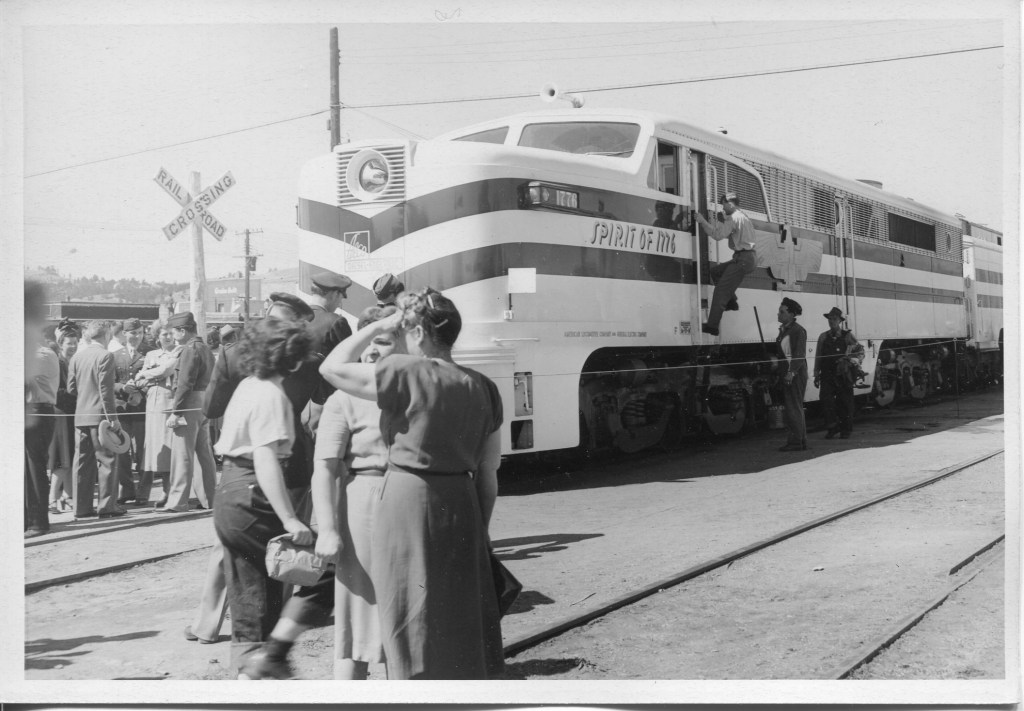
The first curious patriots arrived just after dawn and began to form a line. Standing near the low, wood-shingled, hipped roof depot of the Chicago and North Western railway, they felt the sun rising, casting its light westward onto the grass and ponderosa pine-covered Black Hills and the hogback ridge that split the city like the body of butterfly. Through a gap in that ridge, between the body and the head, the snowmelt swollen waters of Rapid Creek pressed against the burnt yellow and red rock of Cowboy Hill, before flowing through the heart of Rapid City.

As the line grew, locals and visitors from throughout western South Dakota craned to catch a glimpse of the enormous red, white, and blue streamlined diesel-electric locomotive. Behind the “Spirit of ’76,” a series of cars, each built “like a giant safe with 20 tons of high carbon steel,” contained the sacred texts of American democracy—the Mayflower Compact, the Bill of Rights, Lincoln’s Gettysburg Address, and George Washington’s copy of the Constitution.

By 8 a.m., the depot was jammed. A line stretched several blocks, getting longer every minute. The crowd included “all walks of life, the young, the old, the rich and poor.” Many had been anticipating this day for months. Some were school children who had been given the day off with the hope that like pilgrims restored by the bones of the saints, they would be inspired by the documents of the founding fathers. Others were veterans of two world wars who hoped their suffering would be redeemed by words that gave meaning to their shared sacrifice.

A sound system played announcements. Dressed in their red and white uniforms, with drums pounding and brass blaring, the band from Rapid City High School performed for the crowd. Boy Scouts directed traffic, while officers of the Rapid City Police Department, assisted by military police from nearby Weaver (later renamed Ellsworth) Air Force Base watched for out-of- state pickpockets and “angle boys” who traveled the country following the train hawking buttons, badges, pennants and decals as souvenirs. Some of the vendors chafed at these restrictions on free enterprise, especially when they resulted in a short stay in jail for violating some local ordinance. But the Freedom Train organizers had made it clear that they didn’t want a “carnival atmosphere” to surround the near sacred nature of the experience.

Well before the exhibits opened, 48-year old Mayor Fred Dusek arrived. A restless and energetic man who owned and operated a furniture store downtown with his wife Viola, he had lived in Rapid City since 1927. Born and raised on a farm in the sandhills of Nebraska, he had worked briefly as an accountant for the Alex Duhamel Co. before going into business. By 1948, he was a familiar figure in Rapid City government. He served as a city commissioner longer than anyone in the city’s 72-year history, before being elected mayor by his fellow commissioners in 1946.

With a strong city manager form of government, Rapid City’s mayor fulfilled mostly ceremonial duties—like presiding over the festivities surrounding the Freedom Train. But Dusek had a vision for the city and the role of government in shaping that future. It was a vision shaped by his childhood on the rural Great Plains – highly pragmatic, anchored in personal responsibility, but also committed to the collective efforts of farmers to watch out for one another and contribute to mutual prosperity.