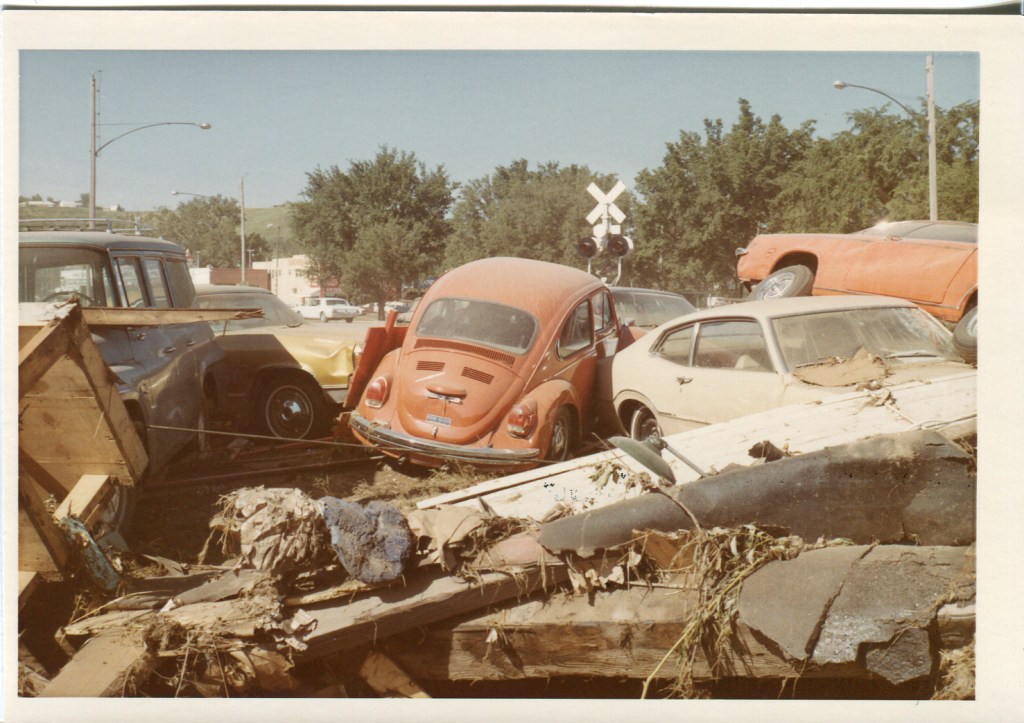
For years people in Rapid City had predicted a major flood, but taxpayers, government officials, and federal engineers refused to take action. Politicians pleaded and harangued citizens and one another, but democracy was never enough. Incumbents were turned out and bond issues failed. Flood control was always too expensive or it interfered with somebody’s God-given property rights.
Along the creek’s banks, the city’s unresolved issues festered: uncontrolled growth fueled a growing demand for fresh water as well as increasing challenges with raw sewage or inadequately treated wastewater. While the city’s most successful businessmen built stylish mid-century homes and flyfished from their manicured lawns upstream, Lakota and other Native peoples lived downstream and closer to downtown in segregated shantytowns and older neighborhoods across from the slaughterhouse and sawmill.
Six hours forced the city to spend years and hundreds of millions of dollars coming to terms with generations of neglect. In the aftermath of the flood, the city was transformed. Some issues were finally resolved. Others were not. Survivors who lost loved ones would never forget.
From the point of view of a handful of major characters, Like a Train in the Night tells the story of the Rapid City flood in three major sections. During the war and after, with stimulus from a nearby Air Force Base, the city grew quickly. Then in the mid-1960s, growth stalled as citizens and business leaders failed to come together to resolve problems or invest for their own prosperity. The night of the flood and the days that followed transformed the lives of these characters and of thousands of people living in the city. In the middle section, Like a Train in the Night captures harrowing stories of survival, heroic moments of rescue, as well as tragic instances of loss. In the final section, a larger democracy in the form of the federal government comes to the rescue to help survivors and the community rebuild their lives and reconstitute the city by restoring the creek, creating an extensive greenway and parks, and redeveloping downtown.
Fifty years later, as the nation and the world are confronted with more frequent and devastating natural disasters, democracy’s ability to safeguard the future and provide justice for all are being tested once again. Like a Train in the Night is a work in progress that vividly challenges the nostalgic vision of postwar America even as it offers stories of resilience that provide hope for the future.
 Like a Train in the Night